Guided Alpine Rock Climbing on Mount Whitney
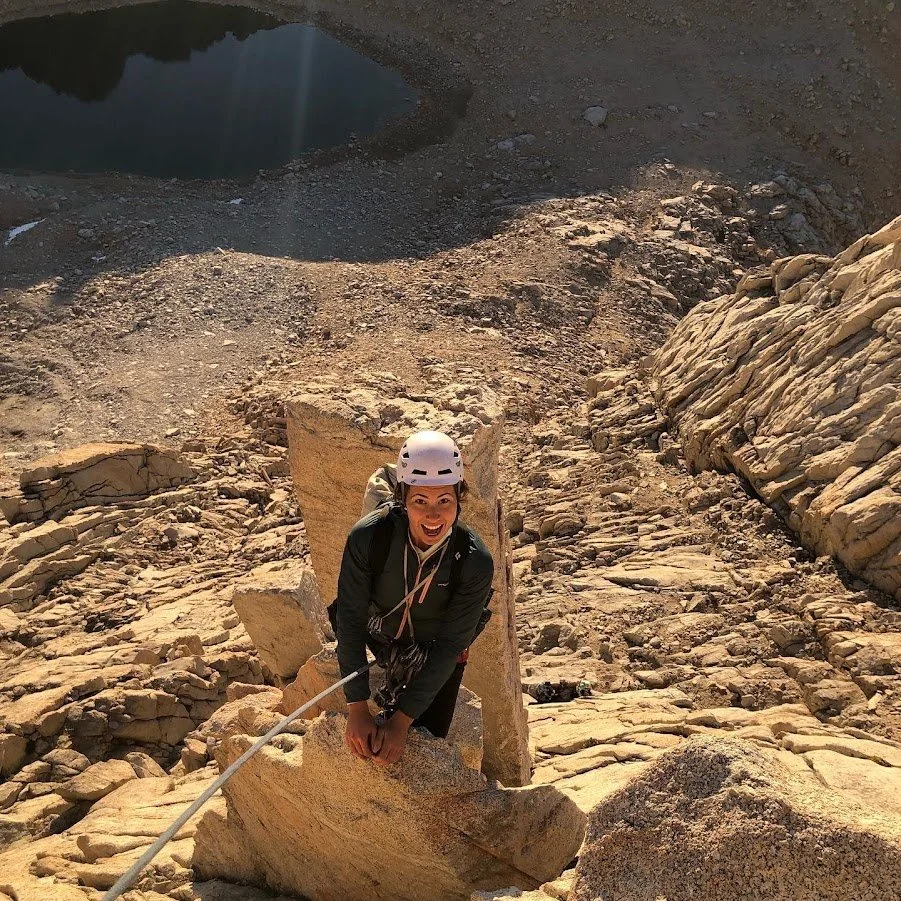
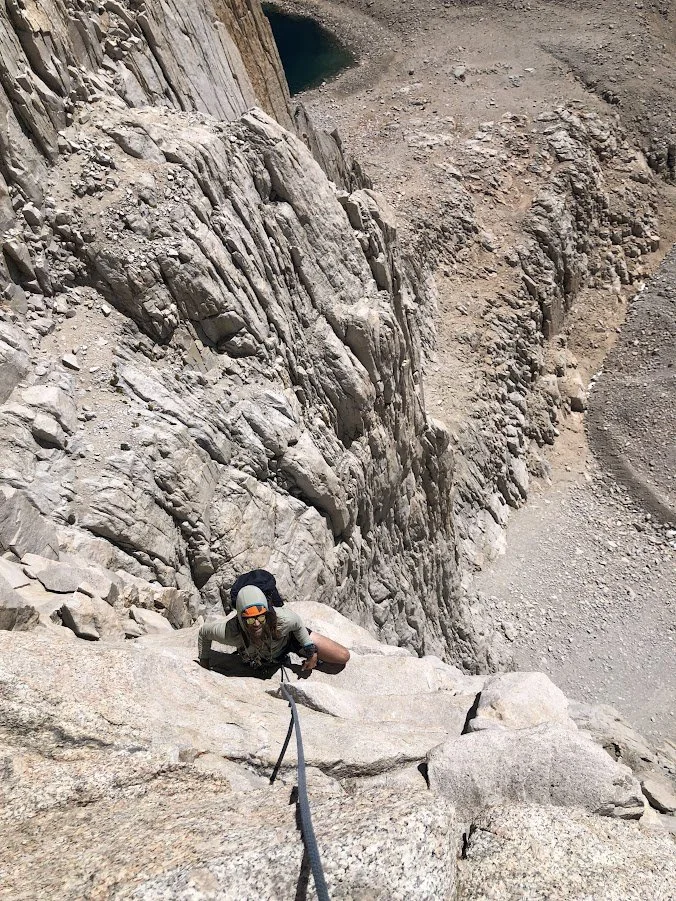
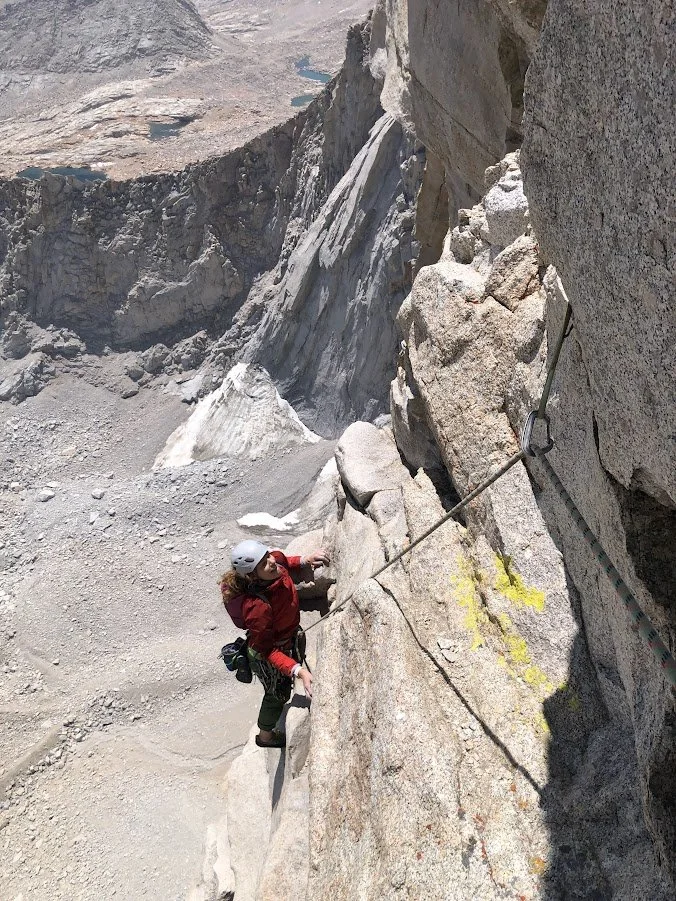
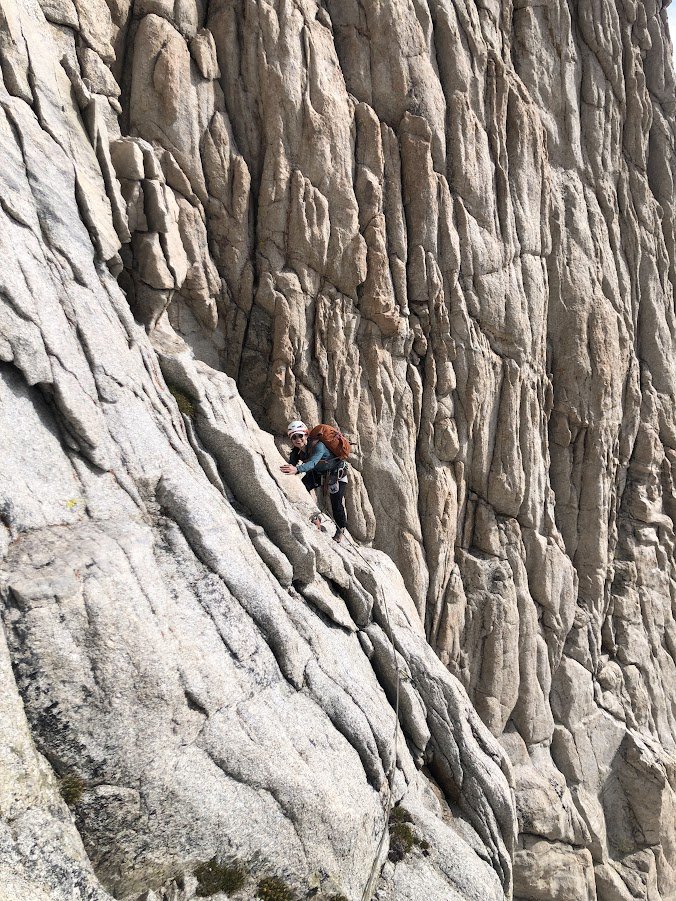
As the highest point in the contiguous United States, Mount Whitney needs no introduction. Many thousands of people reach its 14, 505-foot summit every year, mostly via a trail. A smaller number do so by climbing the 3rd class Mountaineers Route. An even smaller number are drawn to climbing one of the two classic, moderate 5th class rock climbs on its east side: the East Face and East Buttress routes, both 5.7. Neither of these routes climb the full east face of Whitney from its bottom but instead begin by scrambling up the Mountaineers Route for six-hundred or so feet before leaving its blocky ledges and talus and embarking into a world of steep, clean high Sierra rock climbing. I typically guide each of these routes at least once every summer. The East Buttress route is more popular with its reputation for more sustained and better-quality climbing, the fact that it gets more sun, and due to its more direct and obvious route-finding. What the East Face has to offer is the wild position when completing the “Fresh Air Traverse,” where climbers are treated to a couple of thousand feet of exposure below as the route winds its way above the full east face of Whitney. I can’t think of another place where a climber can get a taste of what it feels like to be on something like El Capitan while climbing such relatively easy rock.
I nearly always guide these routes as three-day trips, camping at Iceberg Lake the evening before the climb. The climbs themselves take anywhere from 8-12 hours camp-to-camp. Occasionally, the climbing goes so quickly that we are back at camp at Iceberg Lake with the time and the energy (and the will) to head back out to the trailhead on the second day, but usually it sounds nicer to get a night’s sleep first.
I work with local companies holding guiding permits and we will take care of getting the overnight wilderness permit as well. Please contact me for further info or to hire me as a guide for this climb.