Climbing Mount Sill via the Swiss Arete, 5.8 (?)
Why is it called the “Swiss Arete”? And who was “Sill,” anyway? And what is the rating, really? There’s something about this peak that brings up a lot of questions, and there’s definitely tons of confusion floating around out there about it. As for the rating… It’s 5.6 in Sierra Classics guidebook (Moynier and Fiddler), 5.7 in the Supertopo guide, 5.8 in Climbing California’s Fourteeners (Porcella and Burns). That’s a pretty wide range of estimated difficulty. Having climbed the route a half-dozen times now, I’d call the crux pitch 5.8 to avoid being a jerk. There are basically two steep crack climbing moves at that grade. It’s certainly very doable for 5.6-5.7 climbers willing to struggle a bit at the short-lived crux, assuming you aren’t leading that pitch.
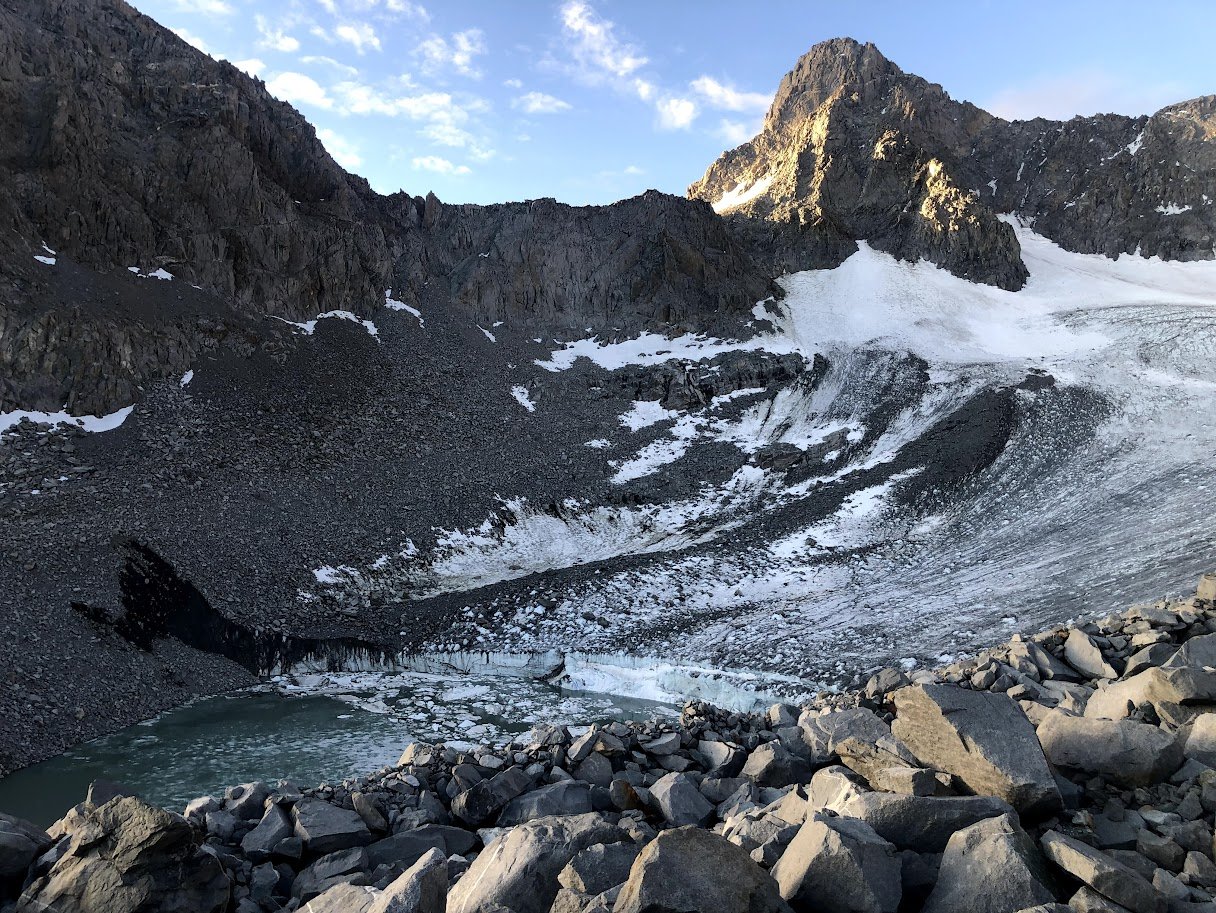
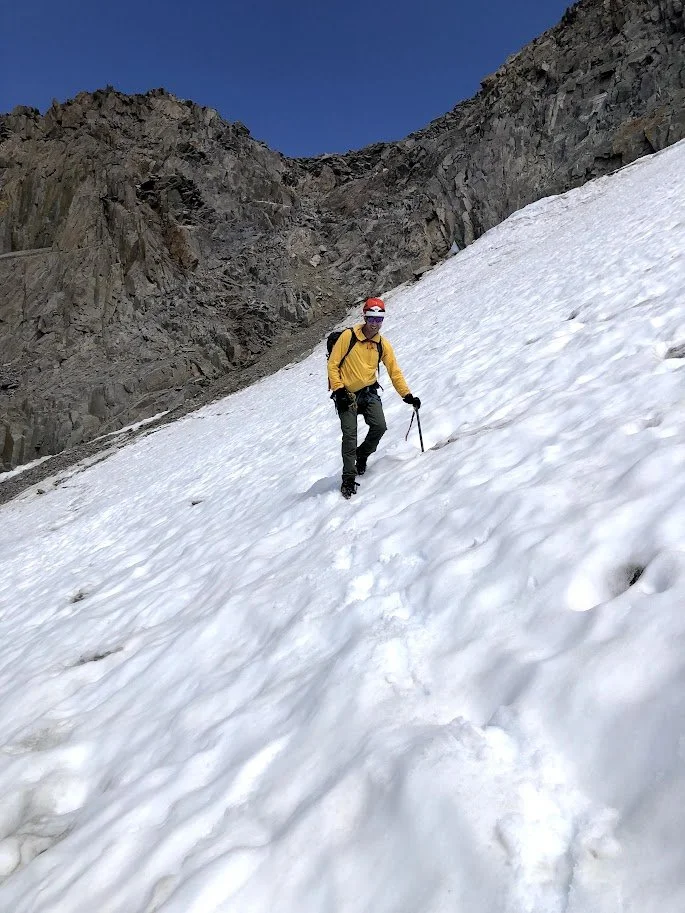
What makes this arete so “Swiss”? I’ll admit to being drawn to this climb because of its name when I first read about it in the Moynier and Fiddler guidebook. Some say it’s a reference to a so-called “Swiss Arete” route on Europe’s infamous Matterhorn (there is a “Zmutt Ridge” route on the Matterhorn named after a Swiss village); others say the name is an homage to the Swiss mountaineering tradition in general. As impressive as Sill looks from the east, it is no Matterhorn, and can be climbed via various 2nd class routes from its backside. All that said, on your approach to the climb from the Sierra Eastside, you cross the largest glacier in the Sierra (the Palisades Glacier), and I don’t think I’ve ever descended from this climb without wearing crampons. So, unlike many High Sierra classic climbs, this route is especially alpine in nature.
Now, to be thorough (since I’ve already gone down some rabbit holes here), what about the name? Who the hell is “Sill”? Good question. He was a man—just like the namesakes of so many other peaks in the range, more-or-less arbitrarily chosen by more-or-less arbitrary persons when you consider the grandeur of what we are naming. I’ve never been a fan of the idea of naming peaks after people, especially when the number of peaks named after men versus women makes mountaineers look rather… unevolved. I’ve got to say that I do look at the name “Mount Sill” a bit differently than, say, Mount Whitney or Mount McKinley (yes, some people still like to call Denali that). Mount Sill was named after a poet and teacher who, as far as I can tell, was one completely devoted to the craft of poetry without any care about making a living from it (he taught at UC Berkely to support himself). Maybe it’s my background as an English major and teacher that makes me admire the likes of Edward Rowland Sill for his purity of intent and purpose. Anyone who pursues poetry lives on the lunatic fringe in our society, and, like devoted climbers, that person is going to hold a special place in my heart. Respect.
The northern Paiute people referred to the mountain as “Nenimish,” meaning “The Guardian of the Valley.” That’s such a better way to refer to a mountain than simply naming it after a person.
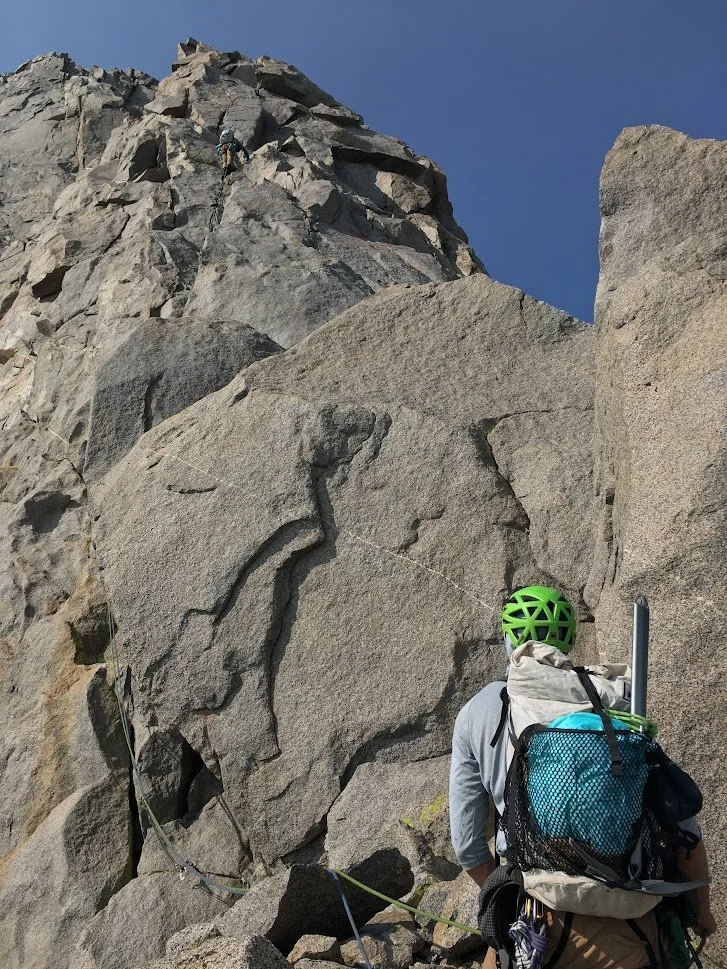
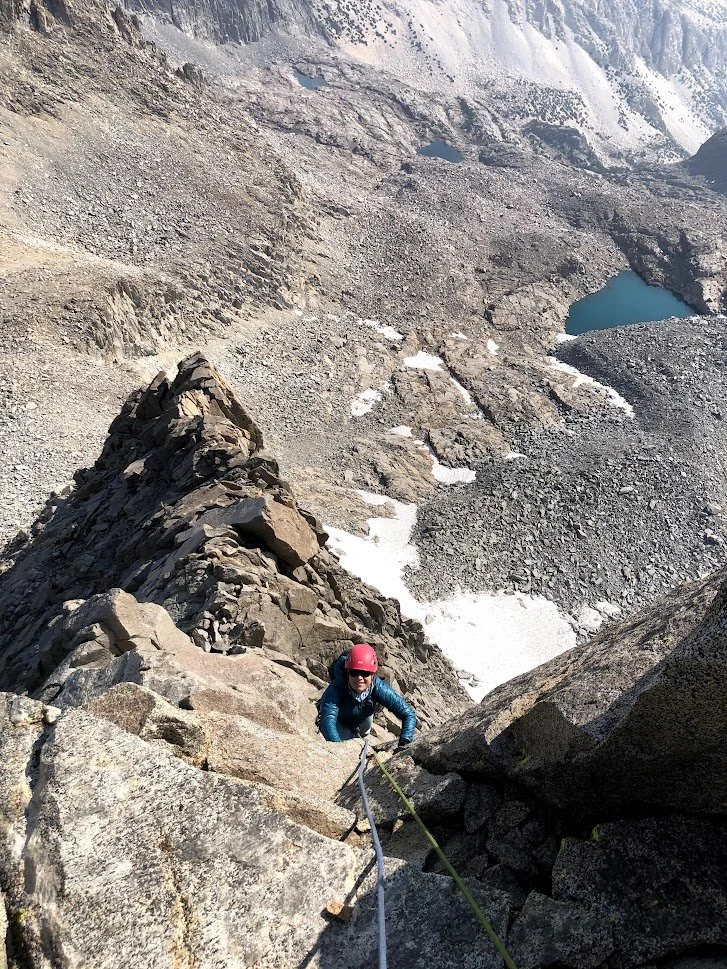
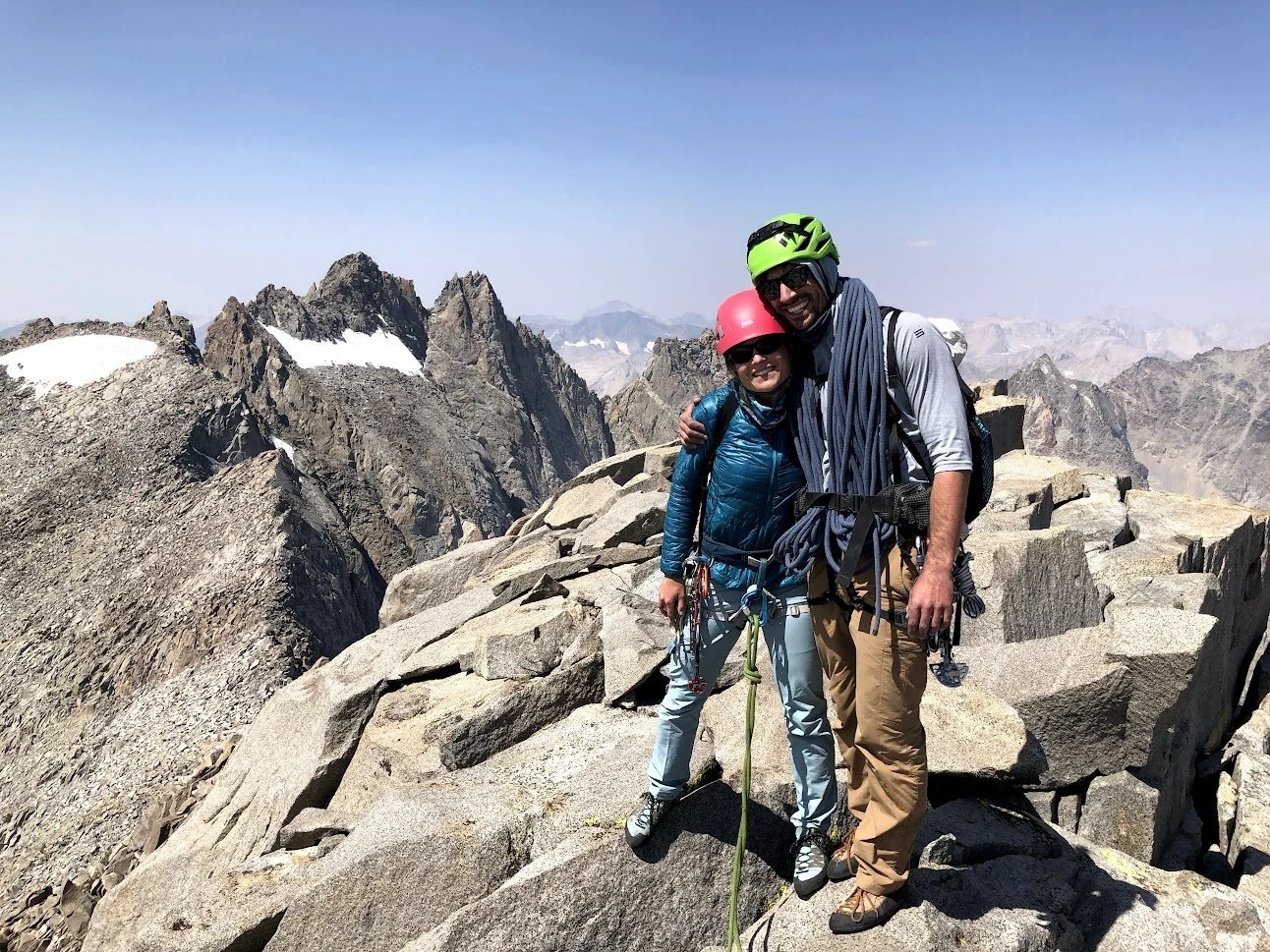
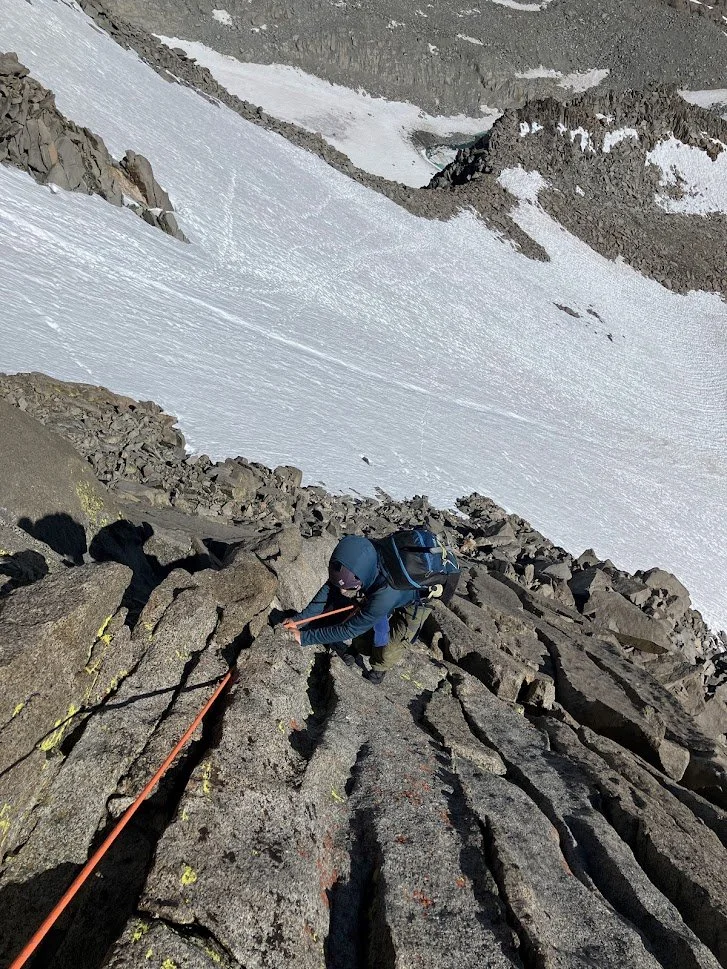
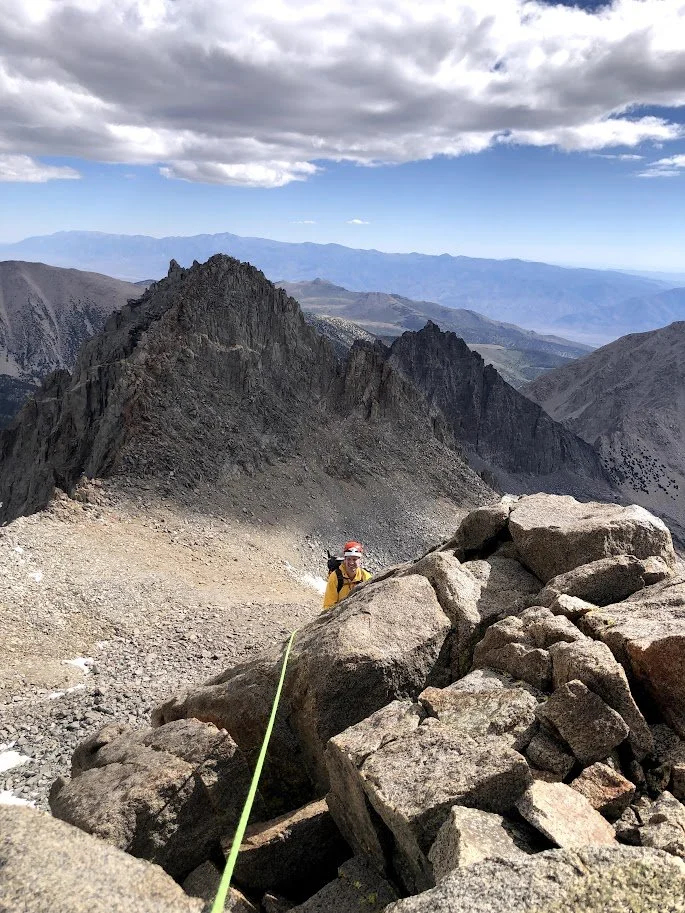
So, what’s it like to climb the Swiss Arete? This is a full alpine climbing experience, with a long approach, snow and glacier travel, a handful of technical rock pitches, and maybe even some patches of ice where your guide might even place an ice screw (not super common in the Sierra). This is big mountain terrain with big exposure and rewarding views (some say the view from Sill’s summit is the finest in the entire range). In a nutshell, climbing Mount Sill via the Swiss Arete is freakin’ awesome. Any summer I don’t get to guide this route at least once is a summer where I feel a bit deprived as a mountain guide working in the Eastern Sierra.
If you’ve got the time, check out Mike Simonsen’s great video of our climb of the Swiss Arete together. And you might check out Mike’s other videos on his Youtube channel (Mike and I have done a bunch of cool climbs over the years).
Are you drawn to climbing Sill via the Swiss Arete? If so, perhaps you are also a poet at heart. Get in touch and let’s see if we can make it happen!